
House Committee Advances Amended MAIN Event Ticketing Bill; Advocates Warn Against Turning Ticketmaster Rules Into Federal Law
The MAIN Event Ticketing Act is headed toward possible consideration by the full House after clearing the House Energy and…
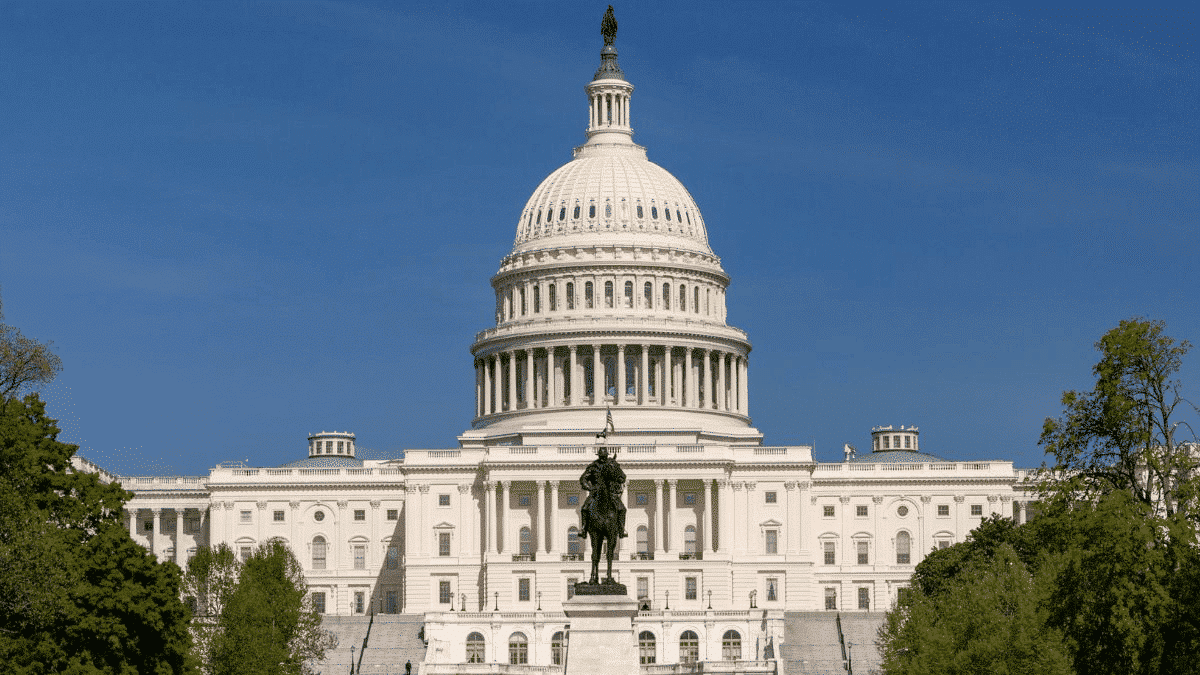
The MAIN Event Ticketing Act is headed toward possible consideration by the full House after clearing the House Energy and Commerce Committee without opposition Wednesday, drawing support from secondary-ticket industry advocates who are simultaneously warning Congress against allowing private ticketing-platform rules to become the basis for federal violations.
The committee voted 36-0 to report H.R. 2713, as amended, to the full House on Sept. 16. The bipartisan legislation is sponsored by Rep. Diana Harshbarger, R-Tenn., alongside Democratic co-lead Rep. Troy Carter of Louisiana. No House floor vote has yet been announced.
The Coalition for Ticket Fairness, which advocates for competition and consumer choice in the secondary ticket market, welcomed the committee action while emphasizing what it sees as an important limit on the legislation.
“The Coalition for Ticket Fairness supports strong enforcement of the BOTS Act and legislation that targets automated ticket fraud,” spokesperson Geoff Vetter said. But the organization coupled that support with a warning about how broader ticket-purchasing rules might eventually be enforced.
“Our message to Congress is simple: stop illegal bot activity and fraud, but don’t hand more power to the monopoly that already controls most of the market,” Vetter continued. “We’ll keep working with lawmakers in the House and Senate to get this balance right, while preserving fair competition and consumer choice.”
That tension may become one of the more consequential questions surrounding the bill as it moves forward: when does breaking a ticket seller’s purchase rule become illegal circumvention under federal law?
MAIN Act Would Give BOTS Act More Teeth
The MAIN Event Ticketing Act would significantly expand both the obligations imposed on ticket issuers and the Federal Trade Commission’s enforcement authority under the 2016 Better Online Ticket Sales Act.
Under the amended House bill, ticket issuers that own or operate online ticket-sales services would be required to maintain access controls or other technological measures enforcing posted ticket-purchase limits. They would also have to establish administrative, technical and physical security safeguards, oversee relevant third-party service providers and regularly update those protections as technology and security threats change.
Ticket issuers would be required to report known incidents of circumvention to the FTC within no more than 30 days of discovering them and take reasonable steps to improve their systems when they have actual knowledge that those systems have been circumvented. The FTC, in turn, would be directed to create a consumer-reporting mechanism and coordinate with state attorneys general and other law-enforcement agencies.
The legislation would also authorize substantially larger civil penalties. A violation could carry a penalty of at least $10,000 for each day it occurs or continues, plus at least $1,000 per violation. Intentional violations would trigger an additional minimum penalty of $10,000 per violation.
A Harshbarger amendment in the nature of a substitute considered at Wednesday’s markup largely preserves the version that previously advanced through the Commerce, Manufacturing and Trade Subcommittee while adding several scope clarifications. Among them, a ticket issuer would not be deemed to own or operate another ticket-sales website merely because it links customers to that separately operated service. The full-committee text also more specifically ties the incident-reporting obligation to issuers that themselves own or operate an online ticket-sales service.
What Counts As ‘Circumvention’?
The provision drawing particular attention defines “circumvention” around the act of “avoiding, bypassing, removing, deactivating, or otherwise impairing” an access-control system, security measure, safeguard or other technological control.
That language was not created during Wednesday’s markup. Substantially the same definition was included when Harshbarger and Carter originally introduced H.R. 2713 in April 2025. The full committee instead preserved that technologically grounded definition as the bill moved another step through the House.
Under this definition, a primary ticket seller such as Ticketmaster could still establish purchase limits, account requirements and other conditions and deploy technology to enforce them. But merely violating one of those private rules would not automatically constitute federal BOTS Act circumvention unless the purchaser also bypasses, defeats or impairs the technological control enforcing it.
Otherwise, CTF argued, a ticket issuer could effectively set the boundaries of federal enforcement simply by expanding the purchasing restrictions contained in its own terms.
Whether courts would ultimately draw that boundary precisely where CTF does would depend on the statutory text and the facts of an individual case. The House bill does not establish a rule that only fully automated software can violate the BOTS Act, and recent federal enforcement demonstrates why that qualification is important.
FTC Cases Show The Stakes
The FTC’s ongoing case against Maryland-based Key Investment Group has already tested an argument that the existing BOTS Act applies only to conventional ticket-buying bots.
The agency sued KIG and affiliated ticket businesses in August 2025, alleging the companies used thousands of Ticketmaster accounts, numerous payment credentials, proxy or spoofed IP addresses, SIM cards and other methods to circumvent purchase restrictions. The FTC alleges the operation acquired at least 379,776 tickets from Ticketmaster at a cost of nearly $57 million before reselling a portion of them through secondary marketplaces. Those allegations remain contested.
In April, Chief U.S. District Judge George Russell III rejected KIG’s motion to dismiss the FTC action, including its contention that the BOTS Act was limited to automated bots. Russell found that the statute applies to “any person” engaging in prohibited circumvention; the ruling allowed the case to proceed but did not determine that the defendants violated the law.
A second BOTS Act case announced in July followed a similar pattern. The FTC alleged Georgia-based Elite Events used hundreds of accounts, fictitious identities, virtual credit-card numbers, proxy IP services and multi-session browsers to circumvent ticket limits covering more than 2,400 events. Elite agreed to restrictions on its purchasing practices and $300,000 in payments under a proposed judgment that imposed more than $10.7 million in penalties, with most suspended based on the defendants’ financial condition. Elite disputed that it intentionally violated federal law and did not admit wrongdoing.
At the same time, the FTC and seven states are separately suing Live Nation and Ticketmaster over the enforcement of some of those same purchase limits. Regulators allege Ticketmaster represented that it imposed strict limits while some brokers routinely exceeded them, and that Ticketmaster subsequently facilitated resale of tickets obtained beyond artists’ stated limits. Live Nation and Ticketmaster dispute the government’s allegations, and the case remains pending.
That has placed ticket-purchasing controls at the center of federal litigation from two directions: regulators are pursuing brokers accused of improperly circumventing them while separately challenging Ticketmaster over how those limits were represented and enforced.
MAIN Act Already Has A Senate Counterpart
The House measure is not starting from scratch on the other side of Capitol Hill. Sens. Marsha Blackburn, R-Tenn., and Ben Ray Luján, D-N.M., introduced Senate companion legislation, S. 196, in January 2025.
The Senate Commerce Committee advanced an amended version by voice vote in April 2025. It was formally reported to the Senate in September 2025 as Calendar No. 144, although the full Senate has not passed the measure.
The House committee’s unanimous vote gives the MAIN Event Ticketing Act another route toward enactment, but H.R. 2713 must still pass the House, and both chambers would ultimately need to approve identical legislation before it could be sent to the president.
Read next
More headlines

Sep 16, 2026
Macklemore Challenges Robert Kraft With $1M Palestine Donation as Loop Tour Fallout Continues
UPDATED: Sept. 16, 7:21 PM Macklemore says he will donate the entirety of the $1 million in net earnings he…

Sep 16, 2026
Andrea Bocelli Charlotte tickets on sale at Spectrum Center
Andrea Bocelli will perform at Spectrum Center in Charlotte, North Carolina, on Jan. 29, 2027. The concert is scheduled to…

Sep 16, 2026
Dave Chappelle Austin tickets on sale at Moody Center
Dave Chappelle will perform at Moody Center ATX in Austin, Texas, on Oct. 26, 2026. The comedy show is scheduled…